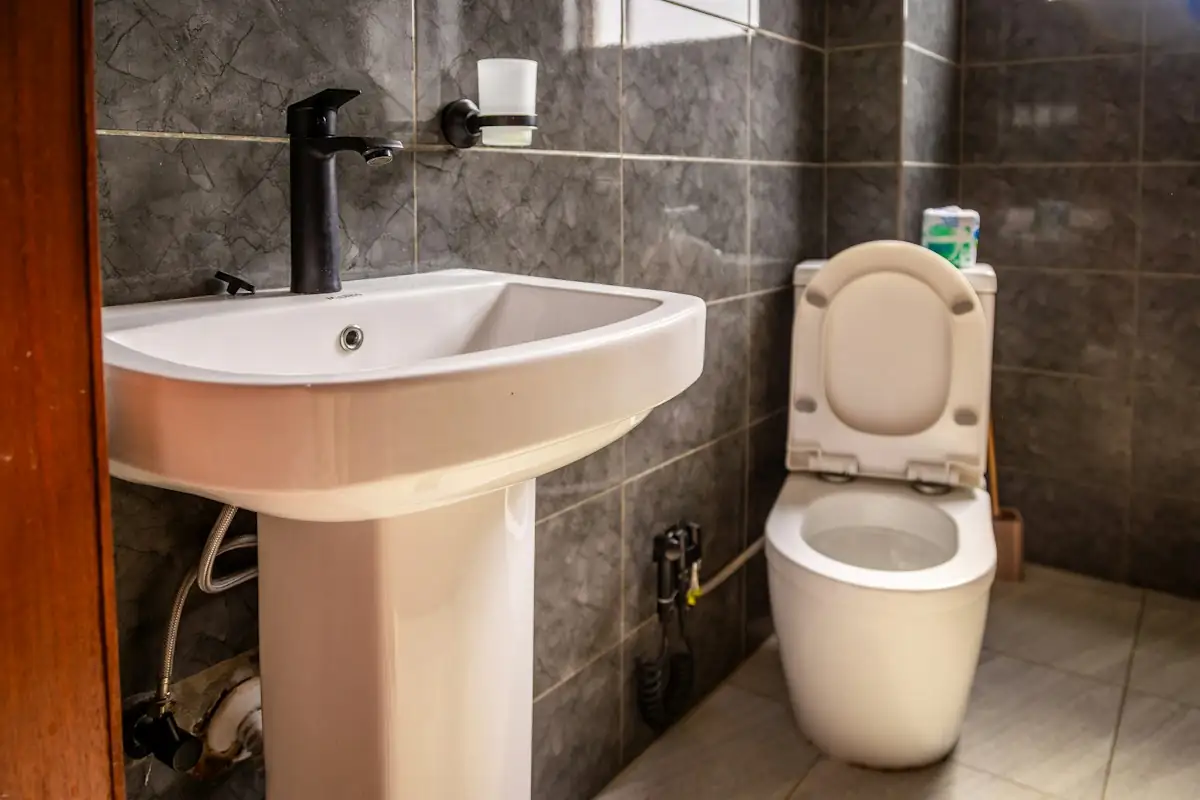
Symptoms that call for toilet installation
Replacing a toilet is usually a choice, not an emergency. Common reasons people call us:
- Porcelain with a crack in it, including a thin seep line
- An old high-volume toilet that uses far more water than a modern one
- Constant clogs from a weak flush design
- Rocking at the base or a stain on the floor around it
- A bathroom update where the old colour no longer fits
If the toilet just runs or leaks at the tank, it may only need parts. Try our running toilet column or book toilet repair first.
How the job is done
Before buying, measure the rough-in. Measure out from the drywall to the middle of the closet bolts holding the toilet down. Most homes use 12 inches. Some older bathrooms use 10 or 14, and the wrong size either will not fit or leaves a gap at the wall.
On the day, we shut the supply, drain and remove the old toilet, scrape the old seal off and inspect the flange. A cracked or sunken flange gets repaired or replaced, because no seal will hold on a bad base. New closet bolts go in, then a fresh wax ring or foam seal, and the toilet is set and tightened evenly.
We replace the supply line and often the shutoff valve too, since old multi-turn valves tend to drip once disturbed. Then the toilet is filled, flushed several times and checked at the base and tank bolts. A bead of caulk around the front and sides finishes it, with a gap left at the back so any future leak shows itself.
Before buying, measure the rough-in. Measure out from the drywall to the middle of the closet bolts holding the toilet down.
From the counter
North York housing notes
Bungalows from the 1950s often have cast iron flanges set in the floor, sometimes on a subfloor that has softened from years of slow leaks. We check the wood around the flange whenever the toilet comes up. Condo bathrooms are usually concrete, so the flange sits right on the slab, and some buildings have quirks with wall-hung units or pressure-assist tanks.
Basement toilets set below the main drain may need a pump or upflush system. That is part of a basement bathroom rough-in rather than a simple swap.
What to do before we arrive
- Measure your rough-in and buy a toilet to match, or ask us to supply one.
- Keep the new toilet boxed until the plumber checks the parts.
- Clear the bathroom floor and the path to the door.
- Find the shutoff behind the toilet and tell us if it does not turn.
Related work
Doing more than the toilet? See bathroom renovation plumbing and faucet repair and installation.
Questions
Should I use a wax ring or a foam seal?
Both work when installed properly. Wax is traditional and forgiving. Foam or rubber seals are cleaner and can be reset. The plumber picks based on the flange height.
Can I reuse my old toilet in another bathroom?
You can, though new seals and bolts are needed, and an old high-flush toilet is usually not worth moving.
How long before I can use the new toilet?
Right away once it has been tested. If caulk was applied, avoid rocking the toilet for a few hours.
How the job runs
- You callDescribe what is dripping, backing up or cold, and the cross streets.
- We ask questionsAge of the building, pipe type if you know it, where the shut-off is.
- We open it upTrap off, clean-out open or wall cut: find the actual fault before quoting the fix.
- We test itOpen each tap on that run, watch the joints dry and show you what came out.