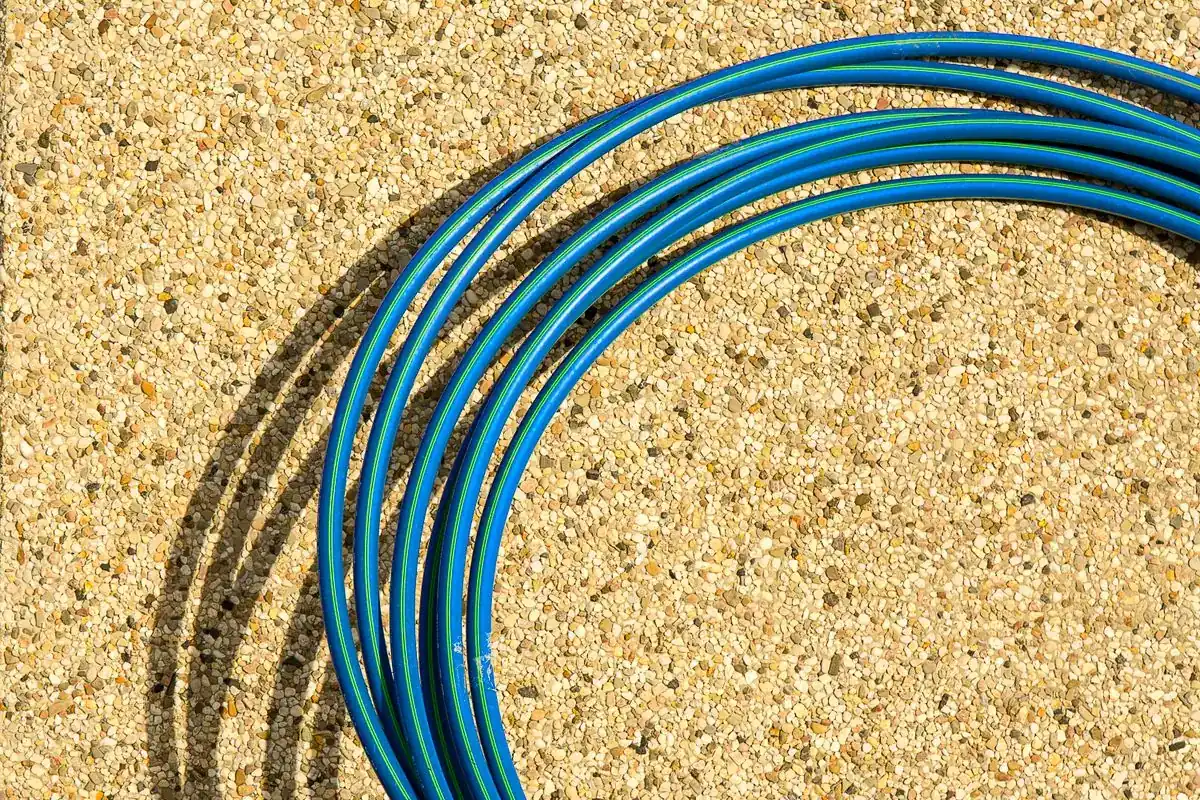
How a jetter works
The machine pushes water at high pressure through a hose with a nozzle on the end. The nozzle has jets pointing backward, which pull the hose forward, and sometimes one pointing forward to break the blockage. As the hose is pulled back, the rear jets scrub all the way around the pipe wall and wash the debris downstream to the sewer.
When we recommend it
- Kitchen lines that clog with grease two or more times a year
- Main lines with fine root hair that grows back between cablings
- Scale buildup in cast iron that a cable cannot shift
- Before a camera inspection, so the camera actually sees the pipe
The machine pushes water at high pressure through a hose with a nozzle on the end.
From the counter
When we do not
Jetting is not right for every pipe. Clay laterals with open joints or broken sections can take water pressure badly. Orangeburg fibre pipe, used in some postwar houses, can collapse. That is why we usually look with a camera first on an older lateral, and choose cable or jet based on what we see.
On the day
- We find an accessible cleanout. Most North York houses have one at the front basement wall.
- The jetter stays outside or in the garage; only the hose comes in.
- We protect the floor around the cleanout with plastic and towels.
- After jetting, we run a camera through to confirm the line is clean.
Houses that benefit most
Postwar bungalows in neighbourhoods like Bathurst Manor and Wilson Heights often still have the original cast iron stack and clay lateral, with mature trees on the boulevard. Roots find the clay joints. Regular cabling cuts them back; jetting removes the hair-fine roots a cable leaves behind, which slows regrowth.
Questions
Will a jetter hurt my drain?
On intact cast iron and plastic, it is. On cracked clay or fibre pipe we look with a camera first and might choose a cable.
How often should a line be jetted?
Only as often as it needs. A grease-prone kitchen line might need it every year or two; many lines never do.
How the job runs
- You callDescribe what is dripping, backing up or cold, and the cross streets.
- We ask questionsAge of the building, pipe type if you know it, where the shut-off is.
- We open it upTrap off, clean-out open or wall cut: find the actual fault before quoting the fix.
- We test itOpen each tap on that run, watch the joints dry and show you what came out.